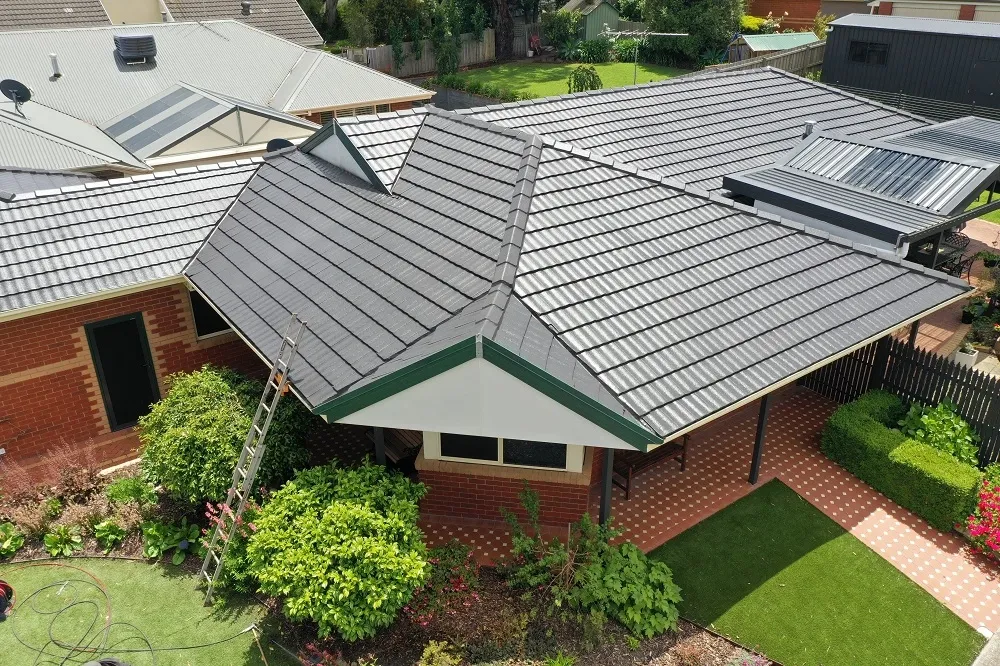
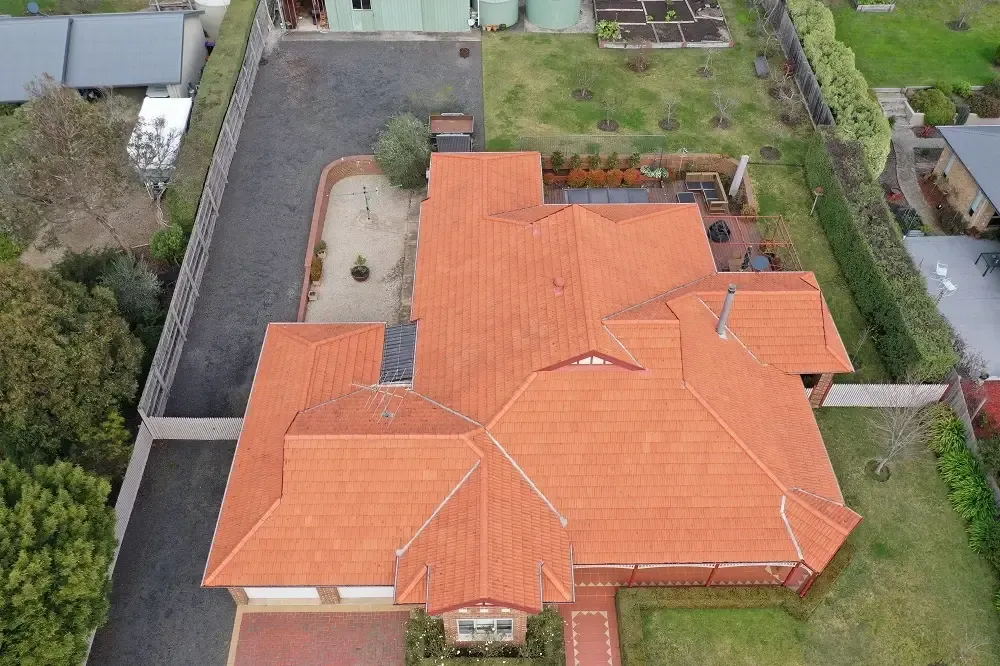
Concrete tile roof maintenance is mostly about a few parts of the roof that wear out long before the tiles do. The mortar under your ridge capping, the pointing that seals it, the valley irons and the surface of the tiles all age with Melbourne’s sun, rain and cold nights. If you look after those parts at the right time, a concrete tiled roof can keep the weather out for many more years.
This guide explains what tile roof maintenance involves, how often a tiled roof needs attention, the signs you can check from the ground, and what happens when Traditional Roofing inspects your roof. We work on concrete and terracotta tiled roofs across Melbourne and the Macedon Ranges from our base in Sunbury.
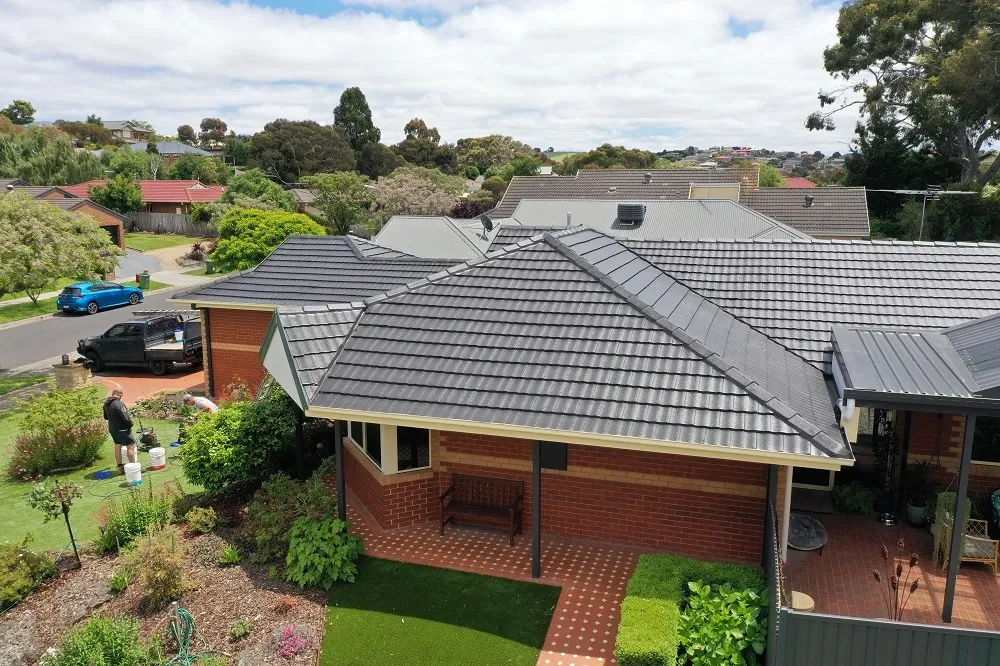
What Does Concrete Tile Roof Maintenance Involve?
Concrete tile roof maintenance means checking and repairing the parts of the roof that let water in when they fail. On most of the roofs we inspect, the problems come from the same places: broken roof tiles, rusty or blocked valleys, and mortar along the ridges that has deteriorated. Fixing these early is what stops a small defect from becoming a leak through the ceiling.
A concrete tiled roof has four areas that need the most attention over its life:
- Ridge and hip capping. The caps along the peaks sit on a bed of mortar called bedding, and a finishing layer called pointing seals the joins over the top.
- Valley irons. These metal channels run where two roof slopes meet and carry a large share of the rain down to the gutter.
- The tiles themselves. Tiles can crack, slip out of line or lose their surface coating over time.
- Gutters. We clean the gutters where applicable, and a gutter clean is included free with every roof restoration.
Tiled roof maintenance is not one fixed service. Some roofs need a single cracked tile replaced. Others need the ridge capping rebedded and repointed, and some are ready for a full roof restoration. An inspection shows which of those your roof needs.
How Often Does a Concrete Tile Roof Need Maintenance?
As a general rule, a tiled roof needs some maintenance after 10 to 15 years, and that work usually includes rebedding and repointing the ridge capping. Once your roof is more than 10 years old, regular inspections are a good idea even if you cannot see a problem from the ground.
Age matters because the materials on a roof are exposed to the weather every day. Years of UV, rain and temperature changes break down the bedding mortar until it cracks, crumbles and lets go of the caps it is meant to hold. Concrete tiles also wear at the surface, and a faded tile becomes more porous, so it soaks up water instead of shedding it.
Some homes need an inspection sooner. Tiles crack from hail and falling branches, so book one earlier after a hailstorm or if trees hang over the roof. Book one before solar panels go on the roof as well. Some roof issues become difficult or costly to fix once the panels are on, so we can assess and repair a tiled roof before your solar installer arrives.
Signs Your Tile Roof Needs Maintenance That You Can See From the Ground
You can spot most of the warning signs from the ground or from inside the house. Please do not climb onto the roof to check the tiles yourself. Concrete and terracotta tiles crack easily underfoot, and working at height is dangerous. Look for these signs instead:
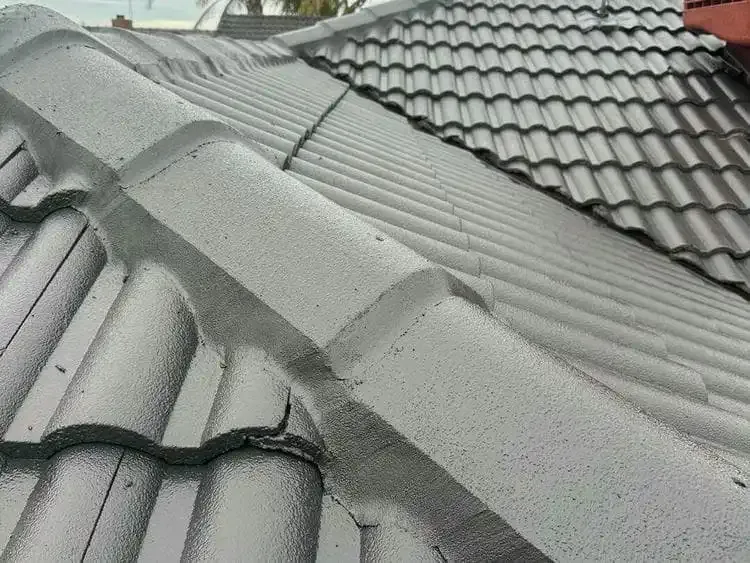
- Cracked or crumbling pointing on the ridge capping. Gaps, hairline cracks or pieces breaking away along the ridges and hips mean the seal has stopped working.
- Loose or crooked ridge caps. Caps that sit out of line have usually lost the grip of the bedding underneath.
- Pieces of mortar in the gutters or on the ground. This is a common sign that the bedding is breaking down.
- Cracked or slipped tiles. Tiles crack with age, hail, falling branches and foot traffic, and they slip out of line when their fixings give way.
- Rust, holes or heavy lichen in the valleys. Water overflowing a valley in heavy rain can also point to a failing valley iron.
- Faded or flaking roof coating. Crumbling paint on the ceiling below can be another sign that the roof has gone without maintenance.
- Lichen, moss and dirt on the tiles. Growth holds moisture against the tiles and speeds up wear.
- Water stains on a ceiling or damp patches on a wall.
A water stain does not always sit under the problem. Water can get in through cracked pointing, deteriorated bedding, slipped tiles or a rusted valley iron, and it often runs along the roof before it shows up inside. That is why we inspect the whole roof when we look for the cause of a roof leak.
Why Ridge Capping Is the Main Part of Tiled Roof Maintenance
The ridge and hip capping runs along the most exposed lines of your roof, and the pointing that seals it is what stops wind-driven rain getting underneath. Two layers hold the caps in place. The bedding is the mortar the caps sit on, and the pointing is the layer applied over the top to seal the joins against water, dust and dirt.
Many older Melbourne roofs were pointed with a sand and cement mortar. That rigid mortar cannot move as the roof expands in the heat and contracts in the cold, so it cracks, crumbles and falls away. Pointing today must be flexible to meet Australian Standards. We use a flexible pointing compound that stays bonded as the roof moves through the seasons.
Which of the two repairs does your ridge capping need? If only the pointing has cracked and the bedding underneath is still sound, roof repointing on its own may be enough. If the caps are loose or the mortar under them is crumbling, the caps need roof rebedding first. We lift the caps, clear away the old bedding, lay fresh bedding, set each cap back in line and finish the ridge with flexible pointing.
Looking After the Valleys and Tiles on a Concrete Tile Roof
Valleys are the internal channels where two sloping sections of roof meet. On a tiled roof, each valley is lined with a valley iron that carries rainwater down to the gutter, so it handles a lot of water in heavy rain. A rusted or holed valley iron sits exactly where the water runs, which is why it so often causes a leak.
When a valley iron has rusted through, we remove it, fit a new valley iron, and then re-lay and secure the tiles along each side. Broken tiles are replaced, and slipped tiles are set back in line and secured. Every gap in the tiles is a path for water, and for birds or vermin, into your roof space. Our tile and valley repairs page shows examples of this work on Melbourne homes.
We replace single broken tiles as well as larger sections. While we are on the roof, we also check for other cracked or slipped tiles, so you know about anything else before it causes a leak.
When Concrete Tile Roof Maintenance Becomes a Roof Restoration
A roof restoration makes sense when the ridge capping, the tiles and the surface all show their age at the same time. Many homeowners assume a worn roof has to be replaced, but a restoration costs far less than a new roof, and it is often all a tired tiled roof needs.
A restoration from Traditional Roofing brings the maintenance work together in one visit:
- A full roof inspection before any work starts.
- Repairs to broken tiles and damaged areas.
- A high-pressure clean to remove lichen, moss and grime from every tile.
- Rebedding and repointing of the ridge and hip capping where needed.
- A protective membrane coating where the roof requires it.
- A free gutter clean and a final check before we leave.
If your roof only has a few damaged tiles or some cracked pointing, a roof repair may be all it needs. We recommend only the work that your roof needs, and we explain why before we quote.
What Happens at a Tile Roof Maintenance Inspection
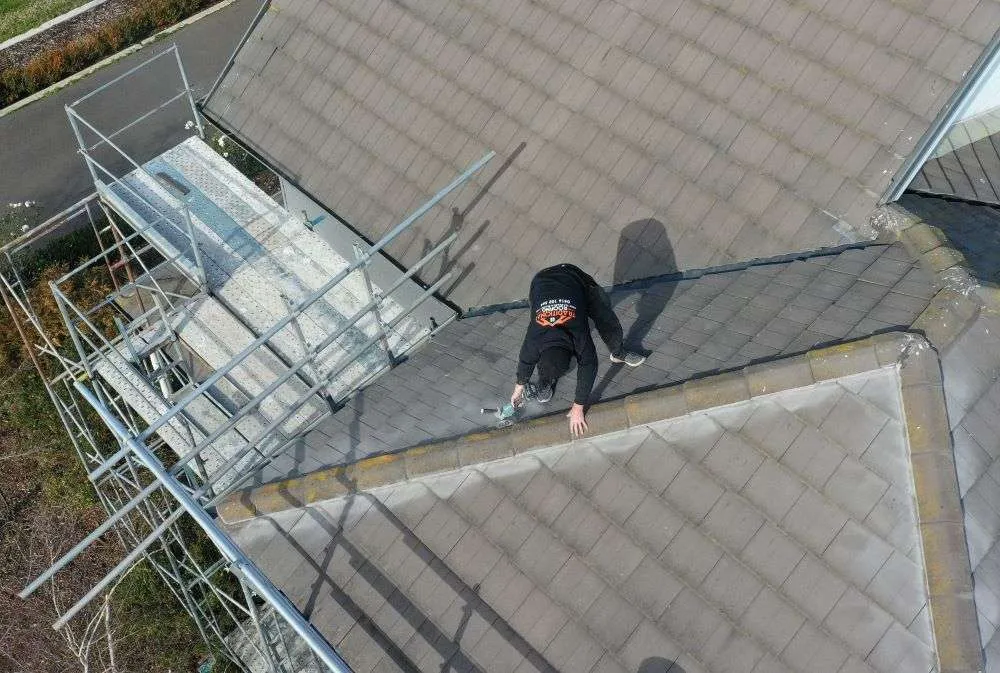
A free roof assessment is the easiest way to find out what your tiled roof needs. We inspect the whole roof, not just the problem you have spotted, and then explain what we found. You receive a clear, detailed quote with no hidden fees.
Here is how booking an inspection works:
- You book online and tell us what you have noticed and where.
- We add your home to our next roof inspection day.
- You receive an SMS with a one-hour arrival window.
- We inspect the roof and send you a detailed quote.
- If you go ahead, we carry out the work and check every part of the roof before we leave.
We plan each inspection day around the most efficient route, so we cannot hold specific times. You will get a tracking link when Justin is on his way. Justin has worked in the roofing trade since 1997, and he supervises the work on every roof we take on.
Tile Roof Maintenance Questions We Are Often Asked
Is concrete tile roof maintenance different from terracotta tile roof maintenance?
The ridge capping, valleys and gutters on both roof types need the same checks. The main difference is the tile surface. Concrete tiles lose their surface over time and become more porous, so a faded concrete roof may need a clean and a membrane coating. On terracotta roofs we restore, a clean removes the lichen and moss and brings the tiles back to their natural colour.
Can tiled roof maintenance stop a leak before it starts?
Yes, and that is the main reason to do it. Maintenance on a tiled roof is what prevents leaks. Broken tiles, rusty or blocked valleys and deteriorated mortar are the most common causes we find, and each one is quicker and cheaper to fix before water starts coming through the ceiling.
Should I get my tile roof checked before installing solar panels?
Yes, it makes sense. Solar panels are a major investment, and some roof problems become difficult or costly to fix once the panels are in place. We can assess and repair your tiled roof before the panels go on. Your solar company supplies and installs the panels themselves.
Book a Concrete Tile Roof Maintenance Check With Traditional Roofing
If your concrete or terracotta tiled roof is more than 10 years old, or you have noticed cracked pointing, loose ridge caps or a stain on the ceiling, book a free roof assessment. We will inspect the roof, explain what we found and recommend the work it needs. Traditional Roofing is a family business based in Sunbury, and we look after tiled roofs across Melbourne and the Macedon Ranges. Book online through our contact page or call (03) 9020 4430.